Warren Hospital
The Good Nurse: A True Story of Medicine, Madness, and MurderWarren Hospital, in Phillipsburg, New Jersey, was the workplace where Charles Cullen found another nursing job after leaving Saint Barnabas and where the suspicious death of patient Helen Dean drew him into a formal investigation. The hospital became a place of new employment and personal ties, but also of unresolved questions: Dean’s son reported a suspected injection, Cullen denied it, and the available examination did not establish that an injection had occurred.
Setting and Cullen’s arrival
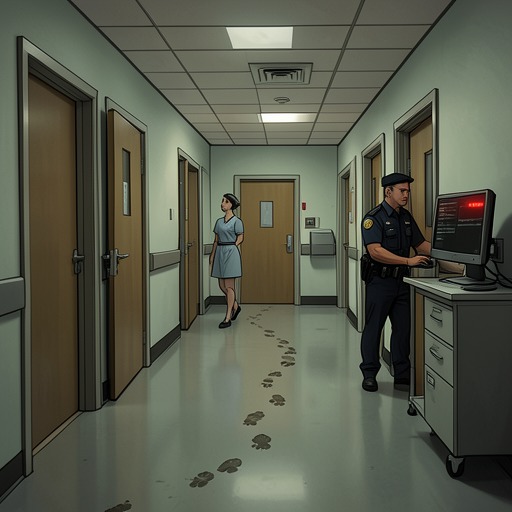
After leaving Saint Barnabas, Cullen expected a more dramatic reckoning than the one that followed. Instead, there were no police waiting for him and no one pursuing him. Two weeks later, he was in Warren Hospital’s human-resources office, filling out an application for another full-time nursing position. His interview took place on January 21, 1992. The move to Warren turned what he had imagined as a fall into a relatively seamless transfer between hospitals.
The practical terms of the job mattered immediately. Cullen wanted as much work as he could get, including nights, weekends, and holidays. Warren offered $14.84 an hour, or $18.30 if he remained on his wife Adrianne’s medical insurance; transfer to the intensive-care unit would add another 23 cents an hour. From a pay phone in the hospital’s main entrance, he called Adrianne to say he had the job. His employment seemed to her like evidence that perhaps his account of the past was credible. With two children and a mortgage, however, the security of having an income mattered more than resolving whether he had done anything wrong.
A workplace bound to family life
Warren was not only Cullen’s workplace. It was also the hospital where Adrianne was scheduled to have gallbladder surgery the following January. By November 1992, she had secretly decided to seek a divorce and had consulted a lawyer. She feared that what had happened to their dog, Queenie, might happen to the children, and she did not want surgery at a hospital where Cullen worked without written documentation of her decision and its reasons. She did not explain the full basis of her fear to the lawyer, but insisted that the paperwork be ready before the operation. The account presents this as Adrianne’s apprehension, not as evidence that Cullen had threatened her at Warren.
The hospital also connected Cullen with Michelle Tomlinson, a fellow nurse on its Telemetry unit. She visited him while he was recovering in an intensive-care unit. Cullen regarded their conversations during quiet stretches of work as unusually candid and believed they were alike; he hoped their connection might become something more. Michelle, who was depressed, gave him attention when he understood himself as wounded and in need of care. Their relationship thus emerged from ordinary workday proximity, while Cullen’s hopes for it made the workplace part of his emotional life as well as his employment history.
Helen Dean’s death and the inquiry
A later episode at Warren placed Cullen’s work under a different kind of scrutiny. Helen Dean, an older woman recovering from breast-cancer surgery, was expected to leave the hospital the next day. Her adult son, Larry, stayed close to her bedside. That presence affected Cullen’s decision to act, though the account does not specify precisely what about it did so. Cullen injected digoxin into Dean’s intravenous line. He later assumed that investigators would work out what had happened, and learned the next day that she had died.
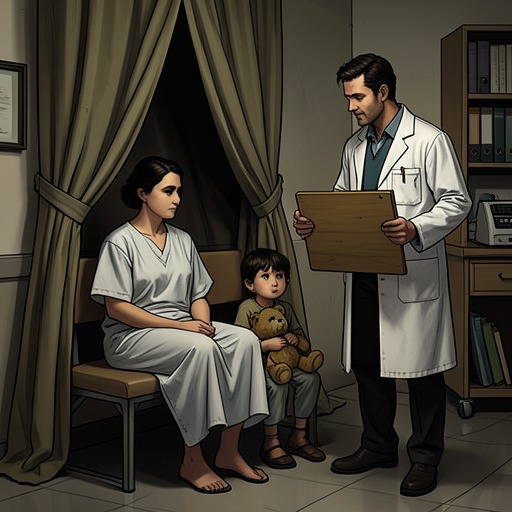
Larry Dean suspected something was wrong and began asking questions. He spoke to his mother’s oncologist, who said no injection had been scheduled, and to her other nurses. They identified the male nurse Dean had described as Charles Cullen. The inquiry therefore began with a family member’s insistence on checking the circumstances of his mother’s care against the hospital’s clinical information. Her death was not simply absorbed into the expected course of recovery: the reported injection and the absence of a scheduled dose made the event a matter for investigation.
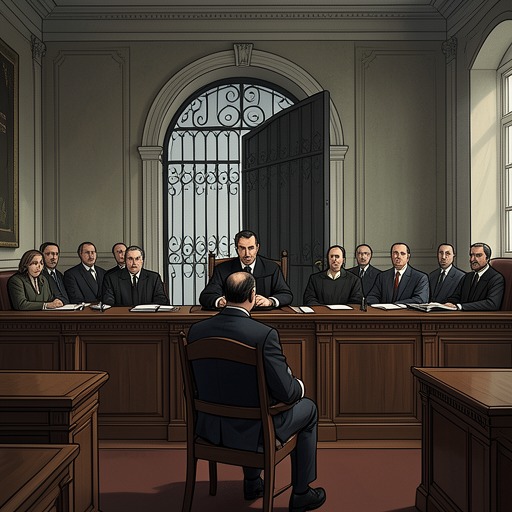
Cullen was questioned by a doctor, Warren administrators, nursing supervisors, and investigators from the Warren County Prosecutor’s Office’s Major Crime Investigation Unit. He denied the injection and other allegations as officials questioned him and searched his locker. Warren placed him on indefinite paid leave. At first, being paid not to work did not seem especially bad to him; at home, with nothing to occupy his days, he grew depressed and considered whether he might arrange to appear a tragic suicide in jail. An ambulance eventually came to his apartment, and he left the door unlocked. He later passed through emergency treatment, inpatient psychiatric care, and outpatient counseling before prosecutors interviewed him again and administered a polygraph.
Evidence, records, and the hospital’s legacy
The available findings left a consequential gap between suspicion and proof. The medical examiner’s examination reported that chemical testing at the suspected injection site was negative. It also recorded that the male nurse suspected of injecting an unknown substance into Dean’s thigh passed a polygraph indicating that he was telling the truth when he denied using a needle. These findings did not establish the suspected injection, even as Larry Dean’s questions and the investigation had made Cullen’s role a central concern.
Years later, Cullen described Warren County as a place where he had been investigated but not charged, saying officials had told him they lacked enough evidence and that the process would be long. He also recast his departure as a discrimination suit that had ended in a settlement of about $20,000. The account qualifies that version: he had been on paid administrative leave for nearly three months, and the money may instead have reflected accrued sick leave during periods in mental institutions. A later note judges a buyout of his contract and accrued leave more likely than the settlement Cullen described, estimating the amount at less than $18,000. The uncertainty around the payment is itself part of the record; his confident retelling does not settle what Warren paid or why.
The difficulties of reconstructing Cullen’s employment extended beyond conflicting accounts of his departure. When investigators later contacted Warren for his personnel records, the hospital first said it could not locate them. After a promised subpoena, a Warren lawyer called back to say Cullen’s file had been destroyed. The book identifies hospital files, police materials, witness statements, and court records as sources for reconstructing his application and the events there, but the missing personnel file limits what could be recovered from Warren itself. The hospital remains significant not because every question about Dean’s death was resolved there, but because it marks the convergence of Cullen’s continued access to nursing work, a family’s alarm, an investigation, and an incomplete institutional record.